
They’re Not Wrong About AI... Create Anyway

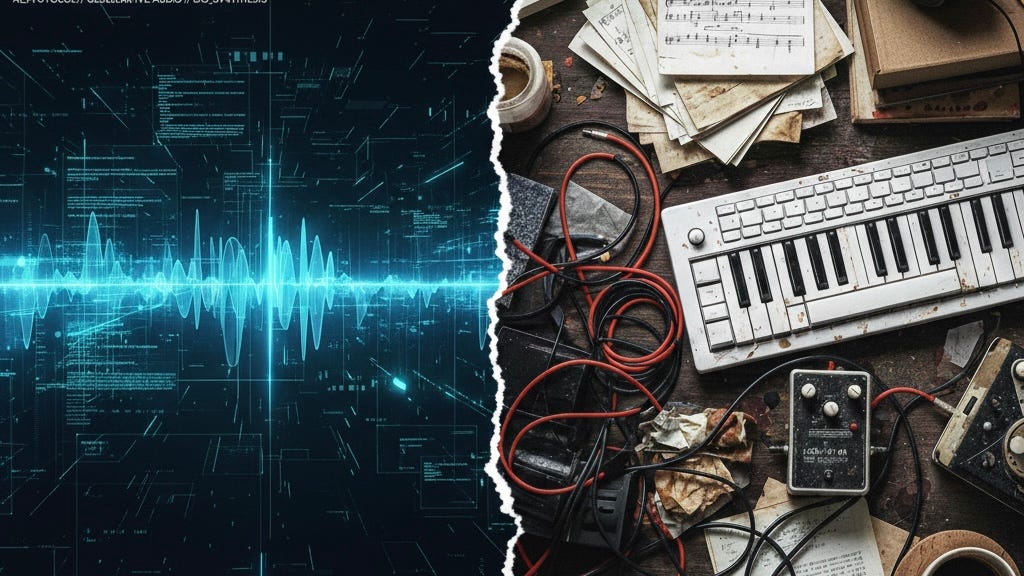
I need to say something uncomfortable up front: if you’re getting into composing for film and TV in 2026 because you think it’s a safe, reliable path to a creative career, you’re probably making a mistake.
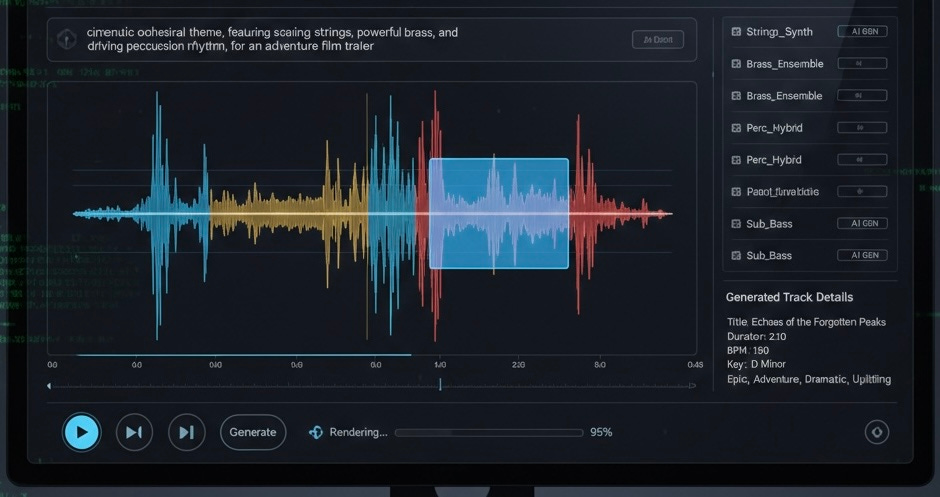
The AI people aren’t fear-mongering. They’re not exaggerating. I’ve heard the tools. I’ve watched editors on Reddit share how they’re using AI to generate placeholder music that’s “good enough” they never replace it. I’ve seen the production library emails about “AI-assisted” catalogs. I’ve talked to colleagues who’ve lost gigs to Soundful or AIVA or whatever’s launching next week.
This is real. It’s happening. And pretending it isn’t—or worse, dismissing it as “soulless” or “not real music”—is just denial with extra steps.
But here’s what I keep coming back to: I’m still writing music. And I’m going to keep writing music. And if you’re reading this, you probably are too.
Not because we’re ignorant about what’s coming. Because we’ve done the math differently.
The Part Where I’m Supposed to Reassure You
The standard composer-educator response to AI anxiety goes like this: “AI can’t capture the human touch! Clients want authentic emotion! The soul of music can’t be replicated!”
I don’t think that’s true. Or at least, I don’t think it’s true enough to matter.
Can AI capture something that ‘feels’ emotionally authentic to most listeners? Yes. Absolutely. We already know this. The Turing test for “does this music make me feel something” has basically been passed for certain genres and contexts.
Can AI generate production library music that’s 80% as good as what a working composer would deliver, but costs nothing and takes 30 seconds? Also yes.
Will clients choose “good enough and free” over “slightly better and expensive”? Of course they will. They already do this with stock footage, stock photography, template graphics. This isn’t new behavior—it’s just new territory.
So I’m not going to blow smoke and tell you AI won’t impact your career. It will. It already is.
The Actual Reason to Keep Going
Here’s what changed my thinking: I stopped asking “can I compete with AI?” and started asking “why do I actually do this?”
- The answer wasn’t what I expected.
I don’t compose because I think I’m going to be the next John Williams. I’m 35+ with a day job and a family—that ship has sailed. I don’t do it because it’s lucrative (it’s not, even before AI). I don’t even do it because I’m guaranteed an audience.
I do it because the act of writing music—of solving the puzzle of how to make 90 seconds feel inevitable, of finding the right chord voicing at 11pm on a Tuesday, of hearing something in my head and pulling it into reality—is one of the few things in my life that feels completely mine.
When I’m deep in a cue, I’m not worried about my mortgage or my kid’s dentist appointment or whether I sent that email. I’m just there, Present. Solving a problem that only exists because I created it.
That experience doesn’t care about market viability. It doesn’t care if an AI can do it faster or cheaper. It exists independent of external validation.
And weirdly, that realization has made me better at the commercial side.
The Sustainable Career Part (Yes, Really)
Okay, but you still want to make money doing this. I get it. Me too.
Here’s my honest assessment of what a sustainable music career looks like in an AI-saturated world:
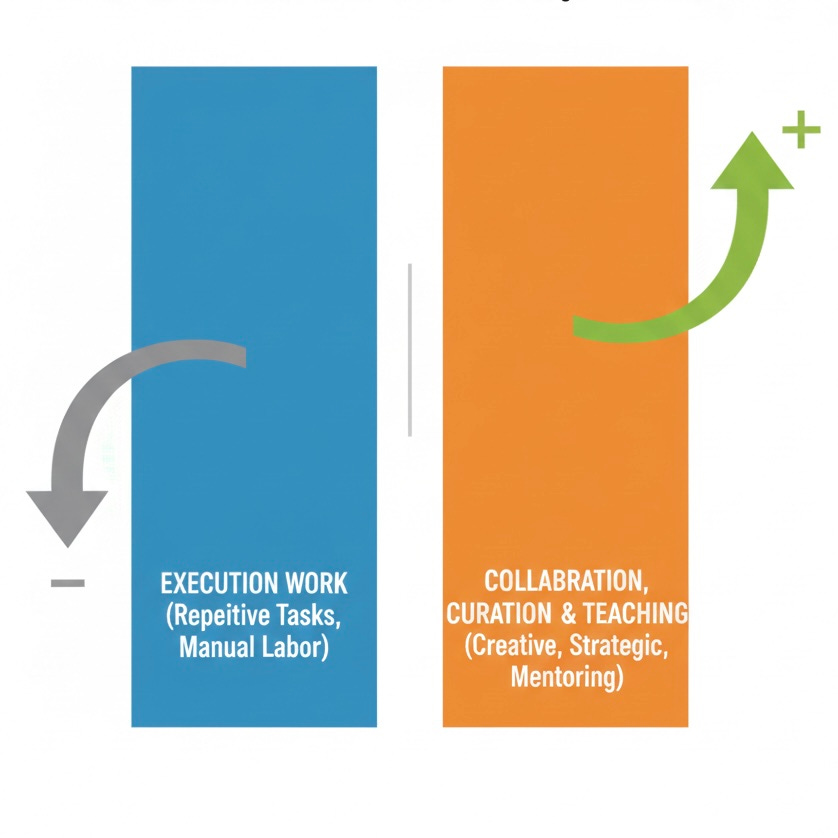
The work that’s hardest to automate is the work that requires iteration with a specific human. Custom scoring for independent filmmakers who want to be in the room with you, who want to try things, who value the collaborative process—that’s not going away. AI can generate options, but it can’t sit in a Zoom call and interpret vague creative direction like “can it feel more…orange?”
Taste curation and creative direction matter more than execution. If you can listen to 50 AI-generated cues and know which one works and why, and how to tweak it, that’s valuable. If you can art-direct AI tools the way a film director works with a DP, that’s a skill. Fighting the tools is pointless. Learning to use them as collaborators might be the move.
Teaching and community building become more valuable, not less. When tools democratize creation, the bottleneck becomes knowledge and taste. Your YouTube channel, your Substack, your ability to help people understand *why* something works—that’s irreplaceable. AI can generate content, but it can’t mentor.
Hybrid approaches are already working. I know composers using AI to generate stems or variations, then heavily customizing them. I know people using AI for mockups to sell clients on ideas, then recording live players for the final. The future probably isn’t “human OR AI”—it’s “human AND AI, in ways we’re still figuring out.”
Relationships and reputation compound. The director who hired you three years ago and loved working with you will hire you again, even if AI is cheaper. Humans prefer working with humans they trust. Lean into that.
Will these paths support a full-time income for as many people as before? Probably not. The pie is shrinking for pure execution work. But sustainable? Yes. Especially if you’re not trying to replace a six-figure salary, but rather build supplemental income doing something you love.
The Permission Structure
Here’s what I wish someone had told me earlier: you don’t need permission to create.
You don’t need the market to validate your choice. You don’t need AI to not exist for your work to matter. You don’t need a guaranteed ROI on every hour you spend.
If you’re waiting for the landscape to stabilize, for the “right time” to invest in your composing career, for certainty that it’ll pay off—you’ll be waiting forever. That was true before AI, and it’s true now.
But if you create because the act of creation is inherently meaningful to you, because you’d rather spend your limited free time writing music than doom-scrolling or binging TV, because you’re curious about what you’re capable of—then none of the AI stuff actually changes the calculus.
You were already creating against the odds. You were already choosing an inefficient path. You were already doing something that didn’t make perfect economic sense.
AI just makes it slightly more obvious.
What I’m Doing About It
Practically speaking, here’s my approach:
- I’m learning the AI tools. Not to replace myself, but to understand what’s possible and where the gaps are.
- I’m doubling down on relationships. More collaborations, more networking, more being a good creative partner.
- I’m focusing on skills that are harder to automate: taste, creative direction, understanding story and picture.
- I’m treating my day job as a feature, not a bug. It removes the pressure to monetize every creative impulse, which paradoxically makes me more commercially viable because I’m not desperate.
- I’m writing more, not less. Because the goal isn’t to out-compete AI on volume or speed—it’s to develop a voice and perspective that’s distinctly mine.
Here’s a revised ending that emphasizes uniqueness and imperfection:
The Uncomfortable Truth
Will everyone who wants a career composing for visual media be able to have one? No. That was already true, and AI makes it more true.
Will it be harder to make a living purely from music? Yes.
Should you pursue this anyway if it matters to you? I think so. But not because I can promise you success. Because I can’t.
Do it because the alternative—not creating, not trying, not seeing how far you can push this thing you care about—feels worse.
Do it because you’d rather fail at something meaningful than succeed at something you don’t care about.
Do it because in 20 years, when AI can do everything we can do now, you want to look back and know you didn’t let fear make your decisions for you.
Create anyway.
But here’s the thing: create “weird”.
AI is really, really good at “correct.” It’s been trained on millions of hours of professionally produced, algorithmically successful, demographically tested music. It knows what works. It can give you the perfect trailer build, the ideal emotional piano piece, the statistically optimal chord progression.
Which means the last place you want to compete is on “correct.”
Leave the mistakes in. That timing that’s slightly off but feels more human? Keep it. That note that’s technically wrong but creates tension in an interesting way? Let it breathe. AI will smooth everything out, quantize everything, pitch-correct everything. Your edge is in the things that “shouldn’t” work but somehow do.
Drop that strange chord sequence in the middle of the cue. The one that made you pause and think “is this too weird?” Yes. Use that one. AI is trained on consensus. Your value is in the choices that make people tilt their head and go “huh, I’ve never heard that before.”
Be wrong on purpose sometimes. Orchestrate in a way that’s unconventional. Put the melody in the bassoons. Let the mix be lopsided. Use a tempo that doesn’t quite fit. The things that make music professors wince might be exactly what makes your work memorable.
Don’t over-humanize. This is the trap I see composers falling into—adding so many “human” performance elements that it becomes a parody of humanity. Exaggerated vibrato, overly rubato timing, artificial imperfections that scream “a person made this!” AI will learn to fake that too. Real humanity is weirder and more subtle. It’s the choice to not fill every space, to let something sit in an uncomfortable silence, to trust a strange instinct you can’t fully explain.
The irony is that AI has made being conventionally good almost worthless, while simultaneously making genuine weirdness more valuable than ever.
When everything can be “professional” and “polished” and “broadcast-ready” at the click of a button, the only thing worth being is *yourself*—with all your strange preferences, questionable choices, and inexplicable instincts.
Create anyway.
Not despite AI. Because of it.
Because the world doesn’t need another perfectly competent piece of background music.
It needs YOUR version. The one only you would make.
The one that’s a little bit wrong.
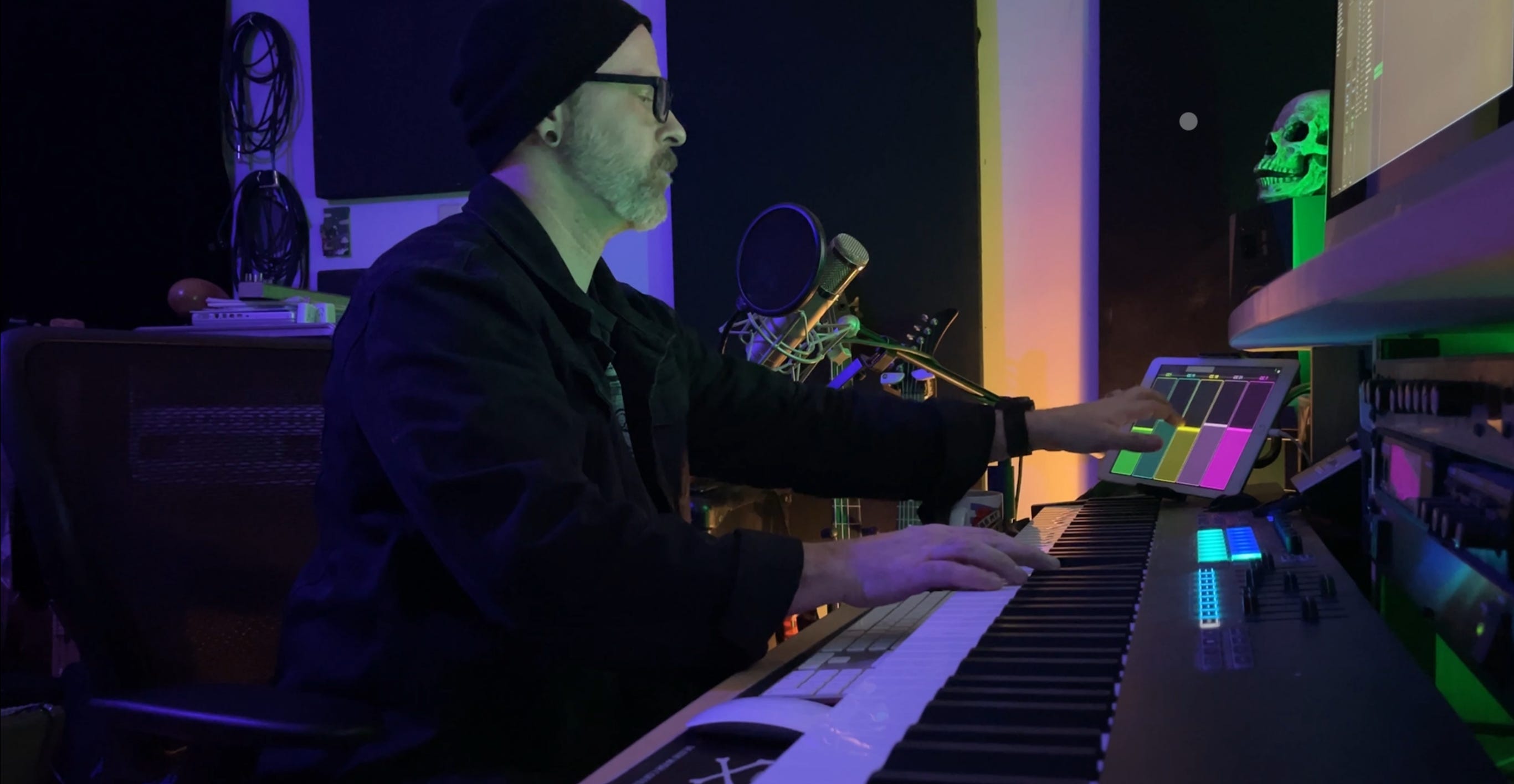
If you want to go deeper into this stuff, I also break down real film-scoring projects, composing techniques, and the business side of being a working composer on my YouTube channel. 👇